
2025 Marine Power Outlook
INTRODUCTION: WATCHING THE HORIZON
Inland operators are no strangers to adapting—but 2025 has many watching the horizon a little more closely than usual. Fuel costs are bouncing around, tariffs are under discussion, and there’s a growing question mark around how emissions rules will land in the years ahead. None of it is certain—but for vessel owners and fleet managers, these questions raise something deeper: how to maintain control over their assets, uptime, and reputation in a market that’s less predictable than it once was. That’s prompting a more strategic approach to equipment planning. Whether it’s revisiting repower timing or exploring different engine platforms, operators are beginning to look beyond specs and focus on longevity, serviceability, and how decisions made today will impact their operations over the next few years—especially as policies, regulations, and fleet demands continue to evolve. This also includes potential shifts in commodity demand—particularly if tariffs affect the customers fleets serve. While marine operators aren’t taxed directly, reduced export volume or paused contracts could influence how often—and how far—vessels are running. This report examines the evolving landscape of marine propulsion and auxiliary systems in the inland market—highlighting what’s changing, why it matters, and how vessel owners can prepare. It’s meant to serve as a practical resource for operators evaluating where to invest time, budget, and planning efforts in the years ahead.
Table of Contents:
- Industry Overview
- Macro Trends Impacting Inland Marine Operations in 2025
- Fuel Pricing Outlook and Cost Implications
- How Emissions Regulations Are Shaping Repower Decisions
- Operational Considerations
- Parts Availability for Legacy Engines
- Serviceability in a Changing Workforce
- Aligning Repowers with Budgeting & Dry Dock Cycles
- Insights from the Field
- What We’re Hearing from Operators
- Common Triggers for a Repower
- Project Spotlights: Engines that Delivered Long-Term Value
- Looking Ahead
- Planning for Downtime, Not Reacting to It
- How to Evaluate an Engine’s Total Lifecycle Value
- Recommendations for Fleet Owners and Vessel Managers
INDUSTRY OVERVIEW
The inland marine industry in 2025 remains stable but cautious. Operators are continuing to work through familiar challenges—rising fuel costs, tightening margins, and ongoing uncertainty around future emissions regulations. While no single trend is disruptive on its own, together they’re reshaping how fleet managers think about uptime, maintenance planning, and capital investment in propulsion systems.
Fuel Prices:
Diesel fuel costs remain volatile, influenced by both global supply chains and domestic refining capacity. While prices have not spiked to 2022 levels, fluctuations continue to impact operating margins—especially for high-hour vessels. Fuel efficiency is once again a priority in engine evaluations, particularly for multi-vessel fleets.
Emissions Compliance:
Though the inland industry is still largely operating under Tier 3 standards, Tier 4 continues to grow in relevance. Many shipyards are seeing increased inquiry into Tier 4-ready platforms—especially for new builds, where SCR integration is easier. That said, most operators are not looking to adopt new emissions technology unless it’s tied to an immediate need, such as a repower or vessel expansion.
Trade Policy & Tariffs:
With tariff discussions ongoing, many engine buyers are paying closer attention to where components are made, not just where engines are assembled. As noted in the sourcing sidebar, some global OEMs have a more predictable position in future trade environments due to proactive negotiations. For operators, this adds another layer to vendor selection: pricing stability, part availability, and long-term serviceability.
Changes in trade policy could also impact inland fleets in less direct ways. Since many marine operators serve commodity shippers—such as agriculture, steel, or energy producers—any shift in tariffs on those goods could affect demand for transport. A slowdown in export volume, for instance, may mean fewer barge loads to move or tighter contract terms. While fleets aren’t taxed directly by tariffs, they often feel the effects downstream, particularly when contracts are tied to global commodity markets.
Labor & Technical Workforce:
Workforce availability remains a concern in 2025, especially for shipyards and service providers supporting inland marine operations.
Changes in employment enforcement have led to workforce reductions in certain areas, and many shipyards continue to report difficulties filling technical roles. Combined with an aging labor force and fewer young workers entering the trades, the result is a measurable gap in skilled marine technicians.
This has placed added pressure on both routine maintenance schedules and more complex projects like repowers. Some operators have adjusted by seeking out equipment that aligns with the technical skill sets currently available in the field.
Dry Dock Availability:
Dry dock schedules remain tight across much of the inland network. Some operators are choosing to repower ahead of failure just to control timing and avoid long waitlists. This trend has made repower planning part of long-term budgeting cycles, rather than an emergency response.
Sidebar: Understanding Engine Sourcing in 2025
What "American-Made" Really Means in a Global Supply Chain
As vessel operators navigate supply chain constraints and shifting tariffs, many are taking a closer look at where their equipment is actually coming from—not just where it's assembled.
In today’s marine engine market, “American-made” often refers to final assembly rather than full production. It’s common for major engine components—such as blocks, crankshafts, or cylinder heads—to be cast or manufactured overseas, in countries like Mexico or China, before being assembled in the United States.
According to the Congressional Research Service (2020), nearly 40% of U.S. manufacturing input value is derived from foreign-sourced components. Likewise, a 2023 study by McKinsey & Company highlights that many heavy equipment manufacturers—including those serving the marine industry—depend on globally sourced parts to meet volume and cost demands. These dynamics reflect the reality of a highly integrated global supply chain that favors efficiency and speed over national exclusivity.
This isn’t unique to any one manufacturer. It’s a product of globalized manufacturing—one that prioritizes availability, labor, and material logistics. Still, it can lead to confusion for operators expecting a fully domestic product when the label says, "Made in America."
Meanwhile, countries like Japan have taken a proactive stance in trade policy. According to the Office of the United States Trade Representative and reporting by Reuters, Japan has sought new trade agreements and bilateral understandings to increase supply chain resilience and reduce friction—particularly in the automotive and industrial manufacturing sectors. This effort positions Japanese manufacturers to face fewer sourcing disruptions in the years ahead, especially when compared to nations with less predictable trade relationships.
Why This Matters to Operators:
- Tariffs can affect total cost after the quote is signed, depending on component origin.
- Lead times may vary based on where core parts are produced—not just where the engine is assembled.
- Reliability of sourcing partners—especially those in countries with strong U.S. trade ties—can reduce long-term risk.
Understanding the full supply chain of an engine gives operators a clearer picture of what they’re buying—not just in specifications, but in future serviceability, part availability, and operational continuity.
Operational Considerations
While industry-wide trends shape the big picture, many of the most important decisions happen at the operational level—on the dock, in the engine room, and across the maintenance calendar. This section outlines how global sourcing, emissions policy, labor availability, and dry dock scheduling are beginning to influence everyday equipment choices.
These intersecting pressures may not require immediate change, but they are prompting some operators to reexamine how long-term planning fits into their maintenance and replacement strategies.
Parts Availability for Legacy Engines:
Operators running Tier 2 or early Tier 3 engines are beginning to encounter longer lead times for parts—not due to failure, but because of shifts in global sourcing and evolving policy. In March 2025, the U.S. administration implemented a 20% tariff on imports from the European Union and a 10% tariff on goods from the United Kingdom and Australia. These measures disrupted existing supply chains and added new uncertainty across heavy equipment manufacturing—including marine engine components (Politico, 2025).
At the same time, the global nature of the parts supply chain has introduced additional challenges. As OEMs adapt to tariff changes, many are reevaluating or replacing component vendors—leading to quality control adjustments, production delays, and in some cases, larger minimum order volumes. These changes can trigger beta testing phases or validation cycles, further extending lead times for mission-critical components.
Meanwhile, the population of active legacy engines—particularly Tier 1 and Tier 2 models—is shrinking. Many rebuilds in this category have shifted to third-party providers using "will-fit" parts sourced from overseas, often from China or Mexico. While cost-effective in the short term, these non-OEM alternatives have led to a decline in service consistency and long-term part support. As a result, overhauling older engines is becoming a less economic and less viable option for many operators—especially when timelines or uptime are at stake.
Emissions regulations are also evolving. In 2023, the U.S. Environmental Protection Agency introduced new emissions standards for heavy-duty engines, effective in model year 2027 (Federal Register, 2023). In response, some manufacturers have begun phasing out support for platforms that can’t meet future requirements, leaving operators of older engines with limited access to parts, software updates, and warranty coverage.
What to Watch For:
- Are essential parts still available domestically?
- Have lead times increased over the past 12–18 months?
- Is your engine platform still supported by the OEM—or only through third-party rebuilders?
- Are component vendors shifting, and how might that affect your current platform?
Serviceability in a Changing Workforce:
Labor dynamics in 2025 are affecting multiple layers of marine operations—from vessel crews to shipyard labor. As experienced crew members retire and fewer young workers enter the trades, some operators are dealing with a rise in preventable failures caused by inexperience, oversight, or deferred maintenance onboard.
At the same time, many shipyards are operating with leaner crews. Changes in policy have increased the need for labor — resulting in a smaller overall pool of skilled workforce for both on-vessel and shipyard-based repairs.
Together, these challenges are creating more pressure on operators to plan ahead. Fewer experienced hands-on deck can increase the likelihood of reactive service events, while lean shipyard staffing can delay repower schedules once a failure occurs.
In this environment, the ease of maintaining and supporting equipment—both in the field and in the yard—has become a critical factor. Planning ahead helps operators secure dry dock space, manage parts lead times, and reduce the risk of being caught off guard by delays that are increasingly outside their control—from unexpected failures to backordered components
Why This Matters to Operators:
- Labor shortages—both onboard and in shipyards—can slow routine maintenance, emergency repairs, and repower timelines.
- Supply chain delays mean even simple component issues can sideline a vessel longer than expected.
- Planning ahead helps operators maintain control over uptime, avoid scheduling bottlenecks, and ensure the right labor is available when it’s needed.
This is why more operators are rethinking how and when they schedule major engine work.
Strategic Timing for Major Mechanical Work:
Repowers, overhauls, and other large-scale mechanical projects are becoming harder to schedule on short notice. Yard space is limited. Parts lead times fluctuate. And a growing reliance on electronic components is introducing new risks—particularly when it comes to supply chain exposure.
Electronically governed engines often rely on proprietary sensors, modules, and diagnostic tools. While these systems offer performance advantages, they’re also vulnerable to sourcing delays and region-specific trade disruptions. As of 2025, over 75% of electronic components imported to the U.S. come from Asian markets, with China, South Korea, Taiwan, and Japan leading the list (U.S. Census Bureau, 2025).
Labor constraints are compounding the challenge. The Bureau of Labor Statistics’ 2025 outlook shows a continuing decline in certified marine technicians, and the U.S. Maritime Administration reports staffing shortages at shipyards and across service networks. Even routine jobs are now subject to delays—not because of demand, but because of a shrinking pool of skilled labor.
In response, many vessel operators are shifting away from reactive decision-making. Instead of waiting for failure, they’re aligning major mechanical work with scheduled dry docks, capital budgets, and known operating forecasts. It’s a strategy that helps mitigate risk—ensuring parts, labor, and yard access are all available when needed.
Insights from the Field
As the operating environment continues to evolve, vessel owners and fleet managers are adjusting how they approach decision-making—particularly when it comes to engine longevity, cost forecasting, and equipment lifecycle planning.
The conversations have shifted. Today’s operators are using better tools, evaluating broader datasets, and asking harder questions about value and sustainability. From the wheelhouse to the boardroom, they’re focused less on specs—and more on what an engine delivers over time.
This section compiles what we’re hearing on the ground: the real-world insights that are shaping purchasing behavior, repower timing, and equipment strategy across the inland marine industry.
What we’re hearing from operators
Across the inland market, operators are re-evaluating how they track and assess engine performance—and using that data to inform when to overhaul, repower, or replace.
Instead of relying on anecdotal feedback or reactive maintenance reports, many are leveraging digital tools like TowWorks, NS5, and RosePoint to analyze engine behavior across entire fleets. By comparing common power packages, calculating call-out frequency, and reviewing spend year over year, they’re gaining a clearer picture of which platforms are delivering long-term value—and which are beginning to cost more than they return.
This broader analysis has narrowed the gap between repair, overhaul, and replacement. Many operators have shared that previously viable fallback strategies—such as sourcing oversized bearings or using aftermarket “will-fit” parts—are now harder to execute economically due to sourcing delays or parts obsolescence.
As one operator put it:
“It’s not that we can’t fix it—it’s that fixing it no longer makes sense.”
At the same time, component-level issues—like bore wear from cavitation or coolant erosion—are prompting deeper evaluations of engine blocks and crankshafts that might have previously been re-used. Instead of assuming another rebuild is possible, many operators are planning ahead for the possibility that it isn’t.
The result is a more deliberate approach to capital planning—driven not just by failure, but by patterns. The focus is shifting from how do we get this engine back online to how long does it make sense to keep running it.
We’re also hearing more candid conversations around “economic obsolescence.” It’s not just about whether the engine runs—it’s about how much longer it’s worth running.
For operators with aging Tier 2 or early Tier 3 engines, these conversations are happening earlier and with more urgency. The goal isn’t just to fix what breaks. It’s to understand when those fixes start compounding into real downtime, real costs, and operational risk that can’t be absorbed vessel by vessel anymore.
Common Triggers for a Repower:
With better access to data and improved maintenance tracking tools, the decision to repower is no longer triggered only by catastrophic failure. Operators today are weighing multiple variables—many of which signal issues long before an engine stops running.
From early indicators in fluid analysis reports to repeat service call patterns across identical power packages, fleets are gathering the information they need to make proactive choices. Here's what’s rising to the top:
- Escalating Maintenance Costs: Recurring repairs, increased downtime, or a growing reliance on workaround parts are all signs that a platform may be approaching the end of its economic life. Even if the engine is technically repairable, the total cost of ownership—labor, parts, lost time—may no longer be justified. Operators now have the tools to measure this holistically, not just per event.
- Supply Chain Limitations: As outlined earlier, Tier 2 and early Tier 3 engine platforms are seeing longer lead times for core components. OEMs phasing out components, coupled with tariffs and global sourcing shifts, can make even a basic part difficult to obtain—or prohibitively expensive. In these cases, a repower becomes less about power gains and more about parts availability.
- Wear Beyond Serviceable Limits: Routine inspections and oil/coolant analysis often uncover signs of internal wear: bore damage from cavitation, heat cycles causing metallurgical fatigue, or erosion from improper coolant mixtures. These findings help operators determine whether another overhaul is feasible—or if the base engine has reached a practical endpoint.
- Unplanned vs. Planned Downtime: Yard space constraints and labor shortages make reactive projects harder to execute quickly or affordably. Some operators are opting to repower early—not because the engine has failed, but because planning ahead allows them to align projects with scheduled dry docks and avoid surprise disruptions.
- Fleetwide Pattern Recognition: With improved visibility into fleet-wide costs, operators are identifying outliers sooner. If one vessel running a particular engine model consistently shows higher service call frequency or parts spend compared to its peers, it may prompt preemptive replacement—especially when the same issues begin surfacing across sister vessels.
Project Spotlights:
What Long-Term Value Looks Like in Practice
Repowers and overhauls aren’t just technical decisions—they’re business decisions. Across the inland waterways, operators are looking for power platforms that hold up under pressure, fit within limited shipyard windows, and reduce maintenance costs year over year.
These recent repowers highlight what’s working in the field—and the operational priorities behind each decision.
M/V Merlin Banta, Chem Carriers 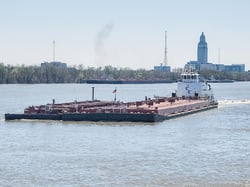
Originally built in 1946 and repowered in 2010, the Merlin Banta is still pushing strong thanks to a pair of Mitsubishi S16R engines with over 51,000 hours logged.
Why it matters: With proper planning, mechanical platforms can extend vessel life far beyond industry norms—offering reliability without frequent overhauls or electronic dependencies.
M/V Ed, American Commercial Barge Line 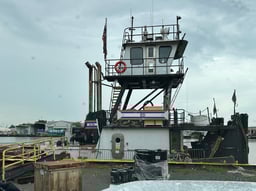
Repowered with Tier 3 S6R-Y3 engines to replace Cummins QSK19s, the M/V Ed is now operating with improved performance and reduced complexity.
Why it matters: For fleet operators, repowering with simpler, field-serviceable engines is helping reduce service bottlenecks, especially when facing labor constraints.
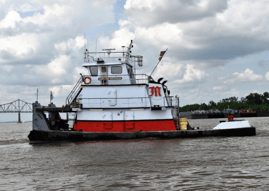 M/V Charles Cuthbert, McKinney Marine
This vessel replaced two 16V71 Detroits with Mitsubishi Tier 3 S6R-Y3s.
The goal: longer-lasting performance and less downtime for daily inland operations.
Why it matters: The original Detroit engines were part of an aging platform with limited OEM support. As parts grow harder to source, operators are turning to newer mechanical engines that offer long-term service stability and better parts availability.
These results point to something more than an engine swap. For fleet managers and captains alike, the decision to repower with mechanically governed Mitsubishi platforms is helping extend vessel life, reduce operating costs, and improve day-to-day performance without introducing unnecessary complexity.
Looking Ahead
2025 is proving that preparedness—not size, not spend—is what sets resilient operators apart. This final section offers practical takeaways on how vessel owners can shift from reactive problem-solving to proactive planning that supports uptime, budget control, and long-term confidence.
Planning for Downtime, Not Reacting to It
The most costly mechanical events rarely start with catastrophic failure. They start with a delay in planning.
In today’s environment—where labor shortages, tariff-driven delays, and tight dry dock schedules are the norm—reactive maintenance carries more risk than ever. As WorkBoat Magazine and BLS data have noted, turnaround times are increasing, not necessarily due to demand, but because of gaps in skilled labor and parts availability.
Proactive operators are treating downtime as a budgeted line item, not a surprise. They’re scheduling major overhauls, repowers, or component updates to align with expected dry dock windows and capital expenditure cycles. That approach gives them more control over timing, staffing, and cost—especially when the unexpected hits.
Ask Yourself:
- What equipment failure would disrupt your biggest contract?
- If a part fails today, how long would it take to get it—and who’s qualified to install it?
- When was your last planned overhaul, and does that timeline still make sense in today’s labor-constrained market?
How to Evaluate an Engine’s Total Lifecycle Value
Specs don’t tell the full story. Neither does sticker price.
To understand the true value of an engine—or any major mechanical system—operators are now looking beyond HP and RPM and assessing:
- Parts accessibility over 10–15 years
- Field serviceability without laptop diagnostics
- Expected overhaul intervals and average downtime per repair
- Support responsiveness from OEM or dealer
- Fuel consumption under actual, not theoretical, load conditions
- Cost per hour of operation, year-over-year
With better fleet data from tools like TowWorks and NS5, many operators are comparing entire engine populations, not just one unit. That allows for clearer decision-making across repowers, rebuilds, and long-term asset management.
Recommendations for Fleet Owners and Vessel Managers
As you plan for the next quarter—or the next five years—here are key recommendations to help you stay ahead of the breakdown:
- Audit your current engine population: Which platforms are aging out? Which ones have declining parts support?
- Reevaluate your repower timeline: Don’t wait for failure to force the decision. Align upgrades with scheduled dry dock time when labor and yard space are more available.
- Work with partners who understand your operation: Engine suppliers, service providers, and yard planners should be thinking 3–5 years ahead with you—not just quoting a price.
- Build budget flexibility around key mechanical projects: Delays in sourcing, tariffs, and labor can all introduce cost overruns. Budget for contingencies, not just line items.
- Invest in data: Your best maintenance decisions will come from visibility. If you don’t have a fleet-wide tracking system in place, now is the time.
Final Thought:
Inland marine isn’t standing still—but it isn’t racing forward either. It’s adapting in slow, steady, strategic increments. In this market, resilience belongs to the operators who look ahead, plan smarter, and choose partners who show up when it counts.

